
◆ Last updated: ◆ By LeDiamont — Zervan GmbH
Cold, on ice, in its tin
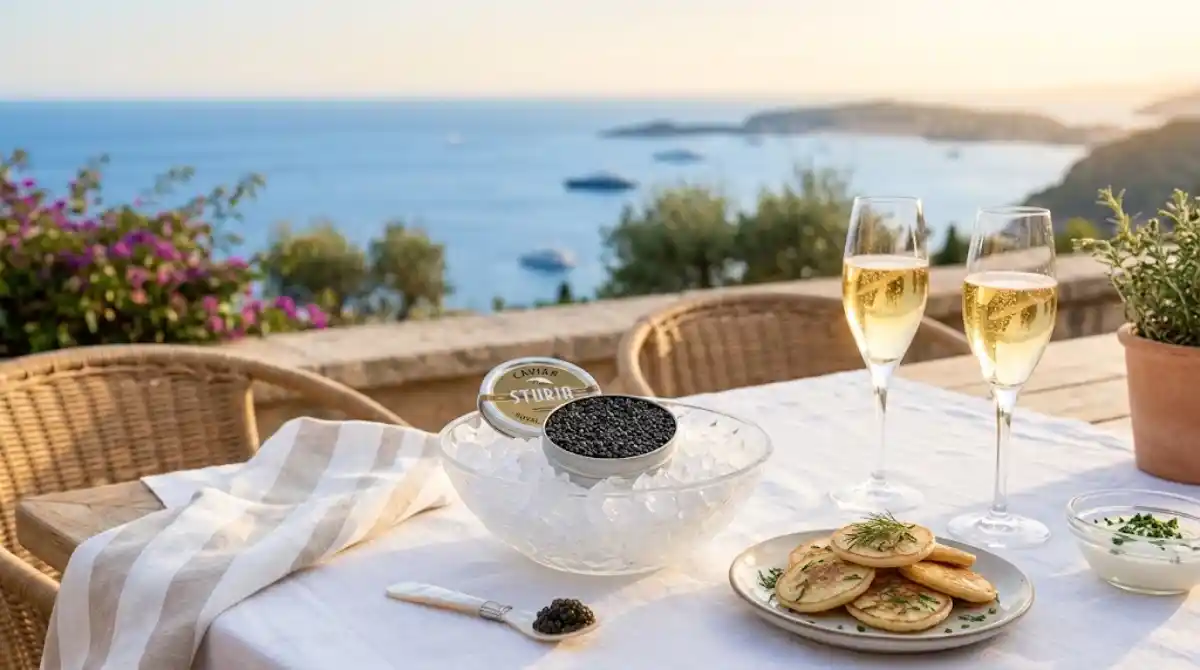
Store caviar at −3 to +3 °C, following its label; take the tin out about 10 minutes before serving and place it on a bed of ice. Open the tin just before your guests sit down, nest it in crushed ice and serve it in its own tin with a mother-of-pearl (or another food-safe, non-reactive) spoon. Offer it plain first, then with warm blini and crème fraîche, and pour brut champagne or ice-cold vodka. For one suggested tasting approach, press the pearls gently against your palate and let them burst; this is a preference, not a compulsory rule.
Key takeaways
- ◆Cold is everything. Keep the tin on a bed of crushed ice throughout serving and replenish the ice as it melts; the grains must not touch the ice directly.
- ◆Use a clean, non-reactive spoon. Mother-of-pearl or food-grade stainless steel are suitable choices.
- ◆Keep accompaniments neutral. Taste the caviar plain first, then try blini, crème fraîche or unsalted butter; use lemon, onion and other strong flavours sparingly.
- ◆Taste it plain first. Start with a small spoonful; gently pressing the pearls against your palate is one way to explore their texture and flavour.
- ◆Plan 30 g per person for a tasting (see our portion guide).
What you need to serve caviar
| Item | Why | Alternatives |
|---|---|---|
| Your caviar tin | Serving from the original tin reduces handling and helps protect the pearls | A chilled glass or crystal bowl |
| Crushed ice | Helps keep the tin chilled during service; replenish the ice as it melts | A caviar server with an ice bowl |
| Mother-of-pearl spoons (one to serve, small ones to taste) | Neutral, doesn’t affect taste | Food-safe horn, wood, glass or porcelain; food-grade stainless steel is also acceptable |
| Blini | The classic base; soft and neutral | Toast points, brioche, boiled new potatoes, plain crisps |
| Crème fraîche | Creamy, slightly tangy contrast | Sour cream, unsalted butter |
| Optional garnishes | Adds texture for guests who like them | Finely chopped egg white and yolk (separately), chives |
| Drinks | Cleanses the palate between bites | Brut champagne, ice-cold vodka, Chablis or another dry white |
How to serve caviar: step by step
Keep it cold until the last moment
Store unopened caviar at −3 to +3 °C and respect its label and use-by date. An unopened tin may keep for up to approximately 3 months, as stated on the label. [3]
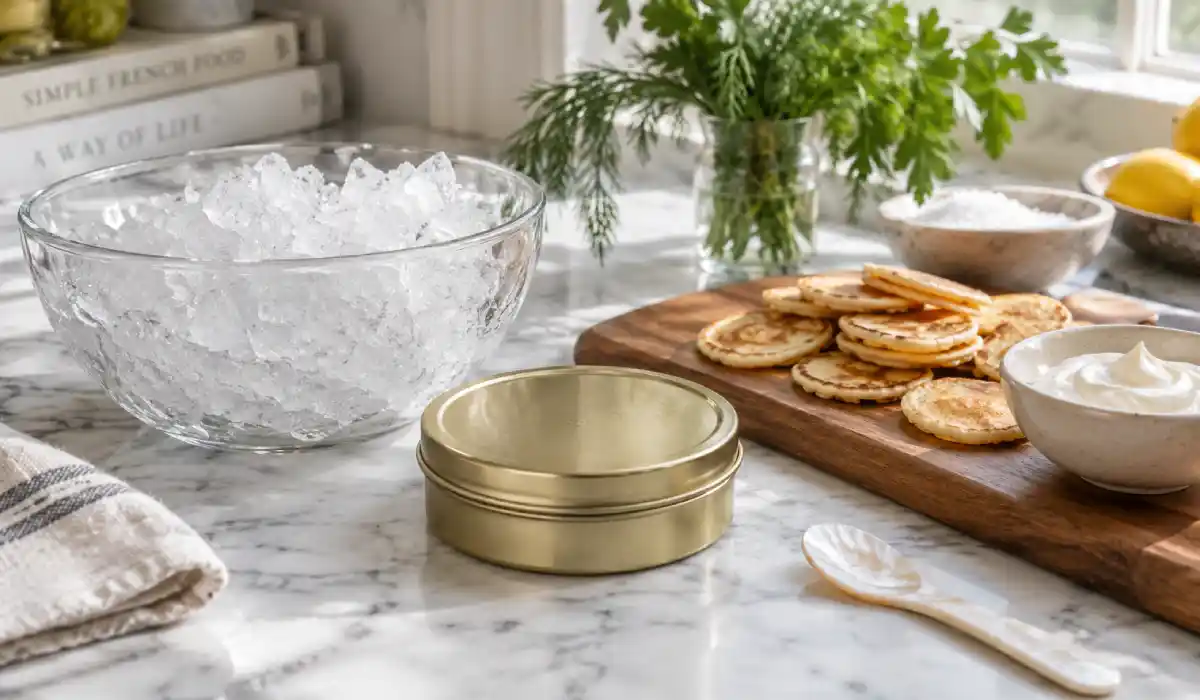
Prepare the table first. Take the tin out about 10 minutes before serving and place it on the bed of ice; bring out only what you plan to serve.
Prepare everything before you open the tin
Prepare garnishes and chill the glasses ahead. Cool cooked potatoes and eggs promptly; keep prepared potatoes, chopped eggs and crème fraîche covered and refrigerated until serving. Warm the blini just before serving, put out small portions of the garnishes, and replenish them from the fridge as needed. Fill a bowl with crushed ice for the tin. [4]
Open the tin correctly
Opening methods depend on the packaging. Follow the producer’s instructions; for a tin with a removable band, the following approach may apply:
- Remove the band.
- Hold the tin flat and lift the lid straight up. Don’t twist or tilt it, or you’ll press the pearls.
- Carefully remove any liner or film.
If a tin is hard to open, use the producer’s recommended opening tool and method rather than forcing the lid towards the caviar.
Serve it in the tin, on ice
Nest the open tin on a bed of crushed ice, with ice around the sides. The grains must not touch the ice directly. Replenish the ice as it melts; serving from the tin reduces handling. If you use a chilled serving bowl, transfer the caviar gently without pressing the pearls.
Serve from the top, not the middle
Take caviar from the surface in thin layers with a flat spoon, working from one side. Don’t stir, dig or press into the tin. That crushes the delicate eggs and releases oil.
Offer it plain first, then with accompaniments
Invite guests to taste a small spoonful on its own before adding blini or crème fraîche. This is the moment the quality of the caviar shows: pearl size, texture and the length of the finish.
Close and chill any leftovers immediately
Reseal and refrigerate promptly at −3 to +3 °C. Enjoy opened caviar within 48 hours for best quality; follow any shorter period stated on the label. [3] For more on refrigeration, storage after opening and shelf life, read our complete guide to caviar storage and shelf life.
Keep the serving time short
Away from ice, aim to finish the caviar within approximately 30 minutes for quality and never leave it unrefrigerated for more than 2 hours. Keep the tin on a replenished bed of ice during serving; ice does not justify leaving a spread out indefinitely. Put out small portions of prepared potatoes, chopped eggs and crème fraîche, keeping the rest covered and refrigerated until needed.
How to eat caviar properly

Tasting caviar is simple once you know what to look for.
- 1Take a small amount, approximately 2–3 g, or roughly half a teaspoon depending on the pearls and spoon. Take your time to explore the flavour.
- 2Observe the aroma. Smell alone cannot establish food safety. Follow the use-by date, cold-chain requirements and producer’s instructions.
- 3Place it on your tongue and, for this tasting approach, press the pearls gently against your palate to let them burst. This is a suggestion, not a rule. [2]
- 4Notice the texture and finish. Notice how the pearls separate and burst, and how the flavour lingers; firmness and texture vary between tins and species.
- 5Cleanse your palate with a sip of champagne, vodka or water before the next bite.
What is a caviar bump?
A caviar bump means tasting a small portion from the back of the hand. It is a serving style, not a test of quality or safety. We suggest using a clean spoon; wash hands and utensils before handling food.
Classic caviar accompaniments: taste plain first
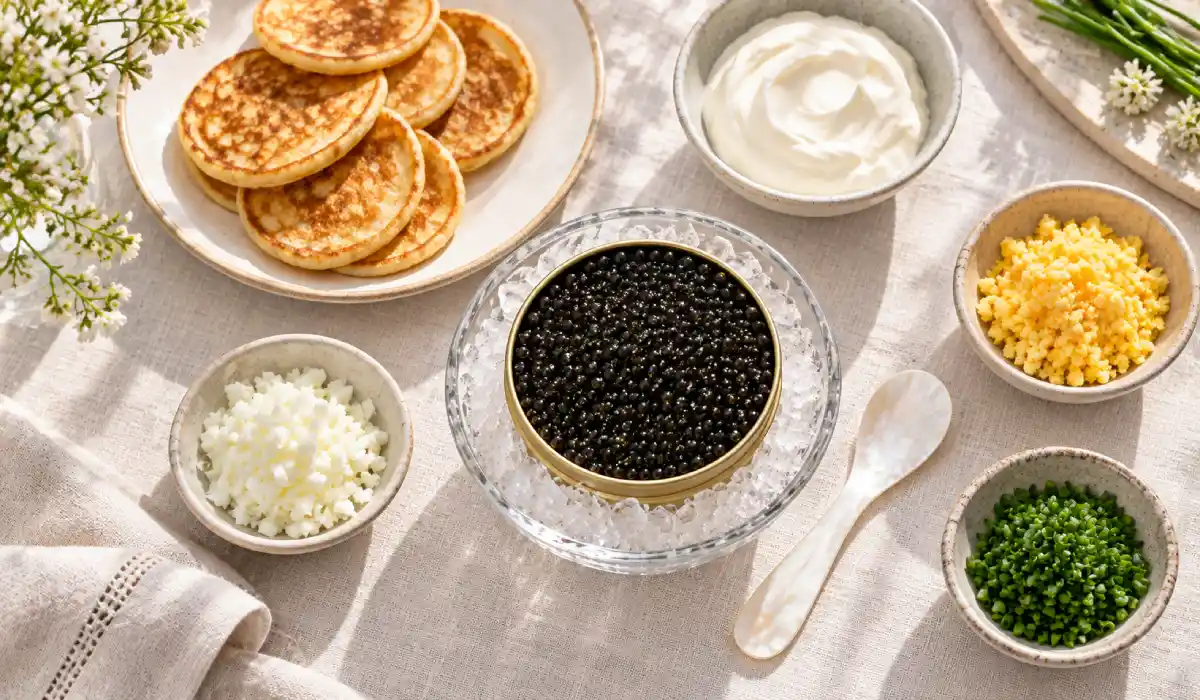
- ◆Blini: small, soft pancakes (buckwheat or wheat).
- ◆Crème fraîche or sour cream: a thin layer under the caviar.
- ◆Unsalted butter on toast points or brioche: a rich, neutral base.
- ◆Boiled new potatoes or plain kettle crisps: simple options for varying the texture.
- ◆Eggs: finely chopped white and yolk served separately, soft scrambled eggs, or deviled eggs.
- ◆Chives: a light, fresh note.
- ◆Lemon: taste the caviar plain first; if you add lemon, use it sparingly so its acidity does not dominate. [1]
- ◆Raw onion and capers: start with a small amount, finely chopped, and compare it with a plain bite of caviar.
- ◆Heavy sauces, strong cheese or spices: try very small amounts after tasting the caviar plain, so the added flavours do not dominate.
Blinis, lightly buttered bread, boiled potatoes, eggs and sour cream are accompaniments described by Great British Chefs. [1] Taste each tin plain first, then choose partners according to its actual flavour and intensity.
What to drink with caviar
| Drink | Why it works | Tip |
|---|---|---|
| Brut or extra-brut champagne | Bubbles and acidity cleanse the palate; the dryness complements salt | Start with a brut style; if you prefer demi-sec, try a small sip after tasting the caviar plain |
| Ice-cold vodka | A traditional pairing described by Great British Chefs; serve according to your preference [2] | Serve straight from the freezer, in small chilled glasses |
| Dry white wine | Mineral whites such as Chablis or Sancerre echo caviar’s sea notes | Start with a lightly oaked or unoaked wine; compare a small sip with the plain caviar |
| Non-alcoholic | Sparkling water with a twist, or a dry sparkling tea | Serve chilled; start with an unsweetened option |
If you enjoy red wine, beer or brown spirits, taste the caviar plain first and try a small sip to judge the pairing for yourself.
How to serve different types of caviar
| Caviar | Flavour profile | Best way to serve |
|---|---|---|
| Beluga | Delicate, buttery, soft large pearls | Start plain from the spoon or on a warm blini; add other flavours sparingly |
| Ossetra | Nutty, creamy, medium-large golden-brown pearls | Plain, or on blini with crème fraîche |
| Sevruga | Intense, briny, small dark pearls | On blini, potatoes or eggs. It holds up well to richer bases |
| Baeri (Siberian) | Mild, clean, balanced | A great introduction: plain, or on canapés |
Hosting a tasting flight? Taste the tins from the most delicate to the most powerful, depending on the caviars actually served. Choose the order by the flavour and intensity of each tin rather than a fixed species sequence. Allow approximately 10 g of each caviar per guest: three tins would mean approximately 30 g per person in total. Offer plain water or small sips of champagne between tastings.
Where caviar fits in the meal
For a tasting-focused meal, you can serve caviar at the start, as an aperitif or first course. You can also try it as:
- ◆A canapé at a reception: 3–5 g on a blini, egg or potato.
- ◆A topping for a main course: a spoonful on scallops, fish or buttered pasta, added after cooking, once the dish has cooled from hot to warm.
- ◆The main event: about 50 g per person for a generous aperitif centred on caviar, or about 125 g per person when caviar forms the main part of the meal.
Common mistakes when serving caviar
- ✕Using a reactive utensil, such as silver. A clean mother-of-pearl or food-grade stainless-steel spoon is suitable; avoiding every metal is unnecessary.
- ✕Opening the tin too early. Caviar starts to lose freshness as soon as it’s exposed to air and warmth.
- ✕Serving it without ice. A tin left on the table warms up within minutes.
- ✕Stirring or pressing the caviar. It crushes the pearls and makes the caviar oily.
- ✕Heating caviar. Let hot food cool to warm and add the caviar after cooking, just before serving, to help preserve its texture.
- ✕Burying it under garnishes. If you’ve paid for good caviar, let guests taste it.
Caviar serving checklist
- Caviar stored at −3 to +3 °C according to the label; tin taken out about 10 minutes before serving
- A bed of crushed ice for the tin, replenished during serving; no direct contact between grains and ice
- Clean mother-of-pearl, glass or porcelain spoons, or food-grade stainless steel; avoid silver
- Warm blini and/or toast points
- Prepared potatoes, crème fraîche and chopped egg kept covered and refrigerated until serving; chives ready
- Brut champagne or vodka, well chilled
- Plastic film to store leftovers
- 30 g of caviar per person for a tasting
Read also: our complete guide to Iranian caviar, its history, its varieties and how to buy it in Switzerland.
Frequently asked questions
How do you serve caviar at home?
Store the tin at −3 to +3 °C following its label. Take it out about 10 minutes before serving, place it on a bed of ice and open it just before serving. Keep the grains away from direct contact with the ice. Taste the caviar plain first, then try blini, crème fraîche and your preferred drink.
What temperature should caviar be served at?
Store caviar at −3 to +3 °C, following its label. Take the tin out about 10 minutes before serving and keep it chilled on a bed of ice throughout service; the grains must not touch the ice directly.
Can you use a metal spoon for caviar?
The advice concerns reactive metals, such as silver. A clean food-grade stainless-steel or mother-of-pearl spoon is suitable.
Should you chew caviar?
For our suggested tasting approach, press the pearls gently against your palate with your tongue. This is a tasting preference, not a compulsory rule.
Is caviar served warm or cold?
For this tasting approach, serve caviar chilled. If adding it to a warm dish, add it just before serving to preserve the texture; follow the product’s instructions.
What is traditionally served with caviar?
Blini, crème fraîche or sour cream, unsalted butter on toast, and finely chopped egg. The classic drinks are champagne and ice-cold vodka.
Do you put caviar on a cracker?
You can, but choose something neutral and unsalted, such as plain water crackers, toast points or blini, so the base doesn’t compete with the caviar.
How long can caviar sit out?
Away from ice, aim to finish caviar within approximately 30 minutes for quality and never leave it unrefrigerated for more than 2 hours. Keep the tin on a replenished bed of ice during service and follow the product’s instructions.
How long does caviar last once opened?
Opened caviar is best enjoyed within 48 hours. Follow any shorter period specified on the label.
Ready to host?
For a first caviar evening, we recommend Iranian Ossetra Caviar: a nutty, creamy style to explore plain first, then with simple accompaniments. Planning for a group? Use our portion guide to choose the right tin. Looking for more ideas? See our Caviar Price Guide and Caviar Gift Guide.
Sources
- What to serve with caviar — Great British Chefs. See “Garnishes” for classic accompaniments and tasting caviar plain first.
- Making the grade: a guide to caviar — Great British Chefs. See “How to taste” for a palate-pressing approach and “Accompaniments” for Champagne and ice-cold vodka.
- Date limite de consommation (DLC), date de durabilité minimale (DDM) : quelles différences ? — French Ministry of the Economy. General guidance on respecting storage conditions, use-by dates and the manufacturer’s instructions after opening.
- Cuisine à domicile : les bons gestes d’hygiène — French Ministry of Agriculture. General guidance on refrigerating prepared food promptly and using clean hands and utensils.