

◆ Last updated: ◆ By LeDiamont — Zervan GmbH
Small, warm, buckwheat blini
Blini are small, soft pancakes, traditionally made with buckwheat flour and yeast, and the classic base for caviar. For about 30 cocktail blini, whisk 60 g buckwheat flour, 60 g plain flour, 3 g instant yeast and 250 ml lukewarm milk, let the batter rise for about 1 hour, add an egg yolk, melted butter and salt, fold in the whisked egg white, then cook one tablespoon of batter per blini for about 1 minute on each side. Short on time? A quick version with baking powder is ready in about 20 minutes.
Key takeaways
- ◆Size matters for caviar: 4–5 cm blini, made with one tablespoon of batter, carry about 3–5 g of caviar in one bite.
- ◆Buckwheat gives flavour: a nutty, slightly earthy taste that suits caviar well.
- ◆Yeast gives lightness; the whisked egg white makes them softer still.
- ◆Serve them warm, not hot: hot blini warm the caviar.
- ◆They freeze well, so you can make them well ahead of a party.
Contents
What are blini?
Blini (singular blin) come from Russian cuisine, where large, thin blini are a centuries-old tradition. The small, thicker cocktail blini served with caviar are closer to mini pancakes. Made with buckwheat, they are soft, slightly spongy and gently tangy: a neutral, warm base for cold caviar and crème fraîche.
Recipe 1: classic buckwheat blini (yeasted)
Ingredients
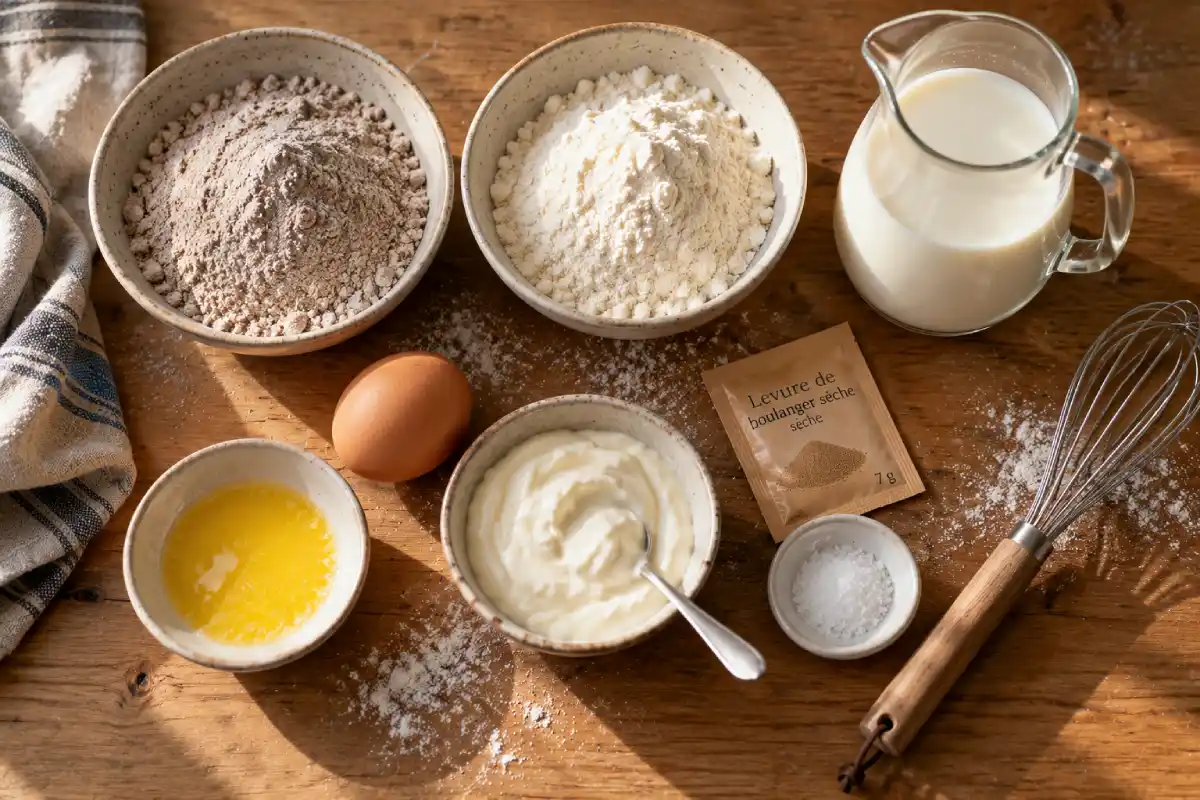
| Ingredient | Metric | US |
|---|---|---|
| Whole milk, lukewarm (about 37 °C) | 250 ml | 1 cup |
| Instant (fast-action) dried yeast | 3 g | 1 tsp |
| Sugar | 5 g | 1 tsp |
| Buckwheat flour | 60 g | ½ cup |
| Plain (all-purpose) flour | 60 g | ½ cup |
| Fine salt | 3 g | ½ tsp |
| Egg, separated | 1 large | 1 large |
| Unsalted butter, melted and cooled | 30 g | 2 tbsp |
| Crème fraîche (optional, for tang) | 30 g | 2 tbsp |
| Butter or neutral oil for the pan | as needed | as needed |
Method
- 1Start the batter. In a large bowl, mix both flours, the yeast and the sugar. Whisk in the lukewarm milk until smooth.
- 2Let it rise. Cover with a tea towel and leave in a warm place for about 1 hour, until the batter is bubbly and has roughly doubled.
- 3Enrich it. Stir in the egg yolk, melted butter, salt and crème fraîche.
- 4Whisk the white. Whisk the egg white to soft peaks and gently fold it into the batter. Leave to rest for 15 minutes.
- 5Heat the pan. Heat a non-stick frying pan over medium heat and brush it lightly with butter.
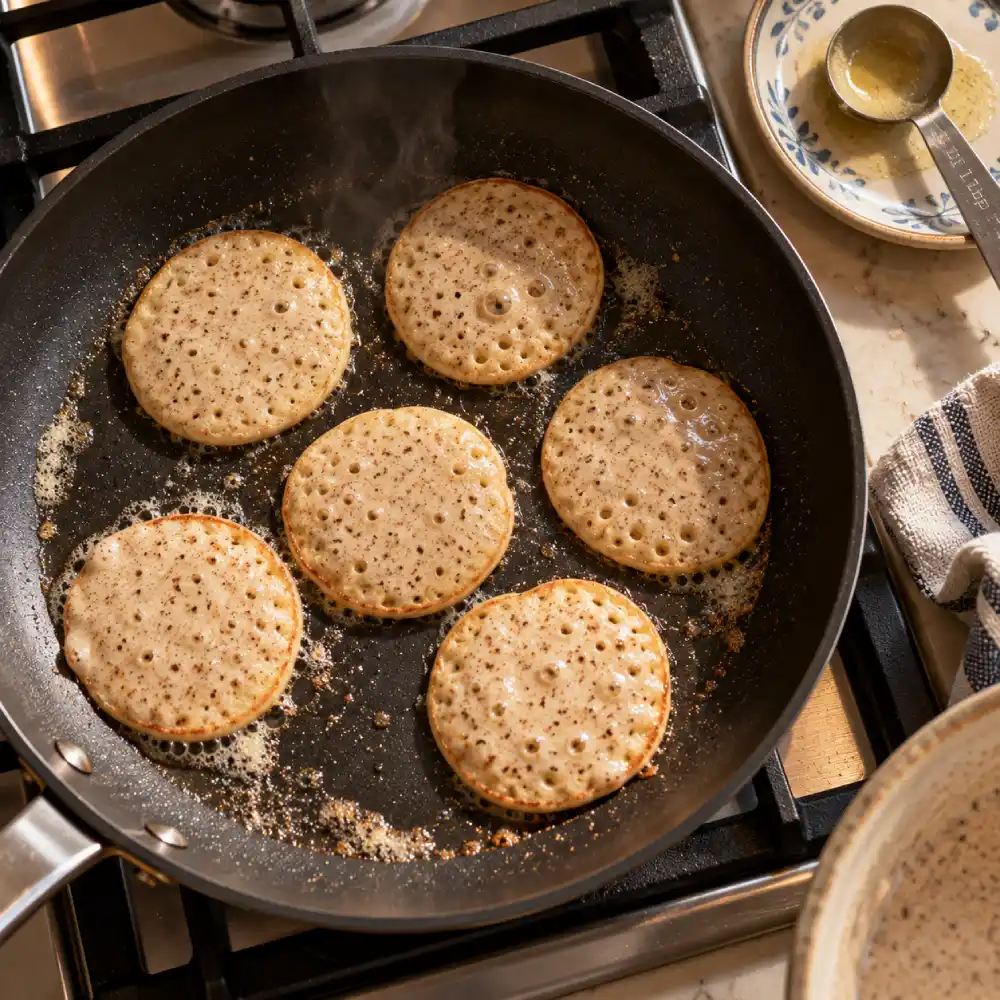
- 6Cook. Drop one level tablespoon of batter per blini into the pan, leaving space between them. Cook for about 60–90 seconds, until bubbles appear on the surface and the underside is golden.
- 7Flip. Turn them and cook for 30–45 seconds more.
- 8Keep warm. Transfer to a plate, cover with a clean tea towel and keep warm in a low oven (about 100–120 °C) while you cook the rest. Brush the pan with a little butter between batches.
Recipe 2: quick blini in 20 minutes (no yeast)
Ingredients
| Ingredient | Metric | US |
|---|---|---|
| Plain flour (or half plain, half buckwheat) | 120 g | 1 cup |
| Baking powder | 4 g | 1 tsp |
| Fine salt | 3 g | ½ tsp |
| Egg | 1 large | 1 large |
| Milk | 180 ml | ¾ cup |
| Unsalted butter, melted | 15 g | 1 tbsp |
Method
- 1Whisk the flour, baking powder and salt in a bowl.
- 2In another bowl, whisk the egg, milk and melted butter.
- 3Pour the wet ingredients into the dry ones and whisk until just smooth. Rest for 5 minutes.
- 4Cook as above: one tablespoon of batter per blini, about 1 minute on the first side and 30–45 seconds on the second, over medium heat.
These blini are a little denser than the yeasted version, but very good when time is short.
Gluten-free buckwheat blini
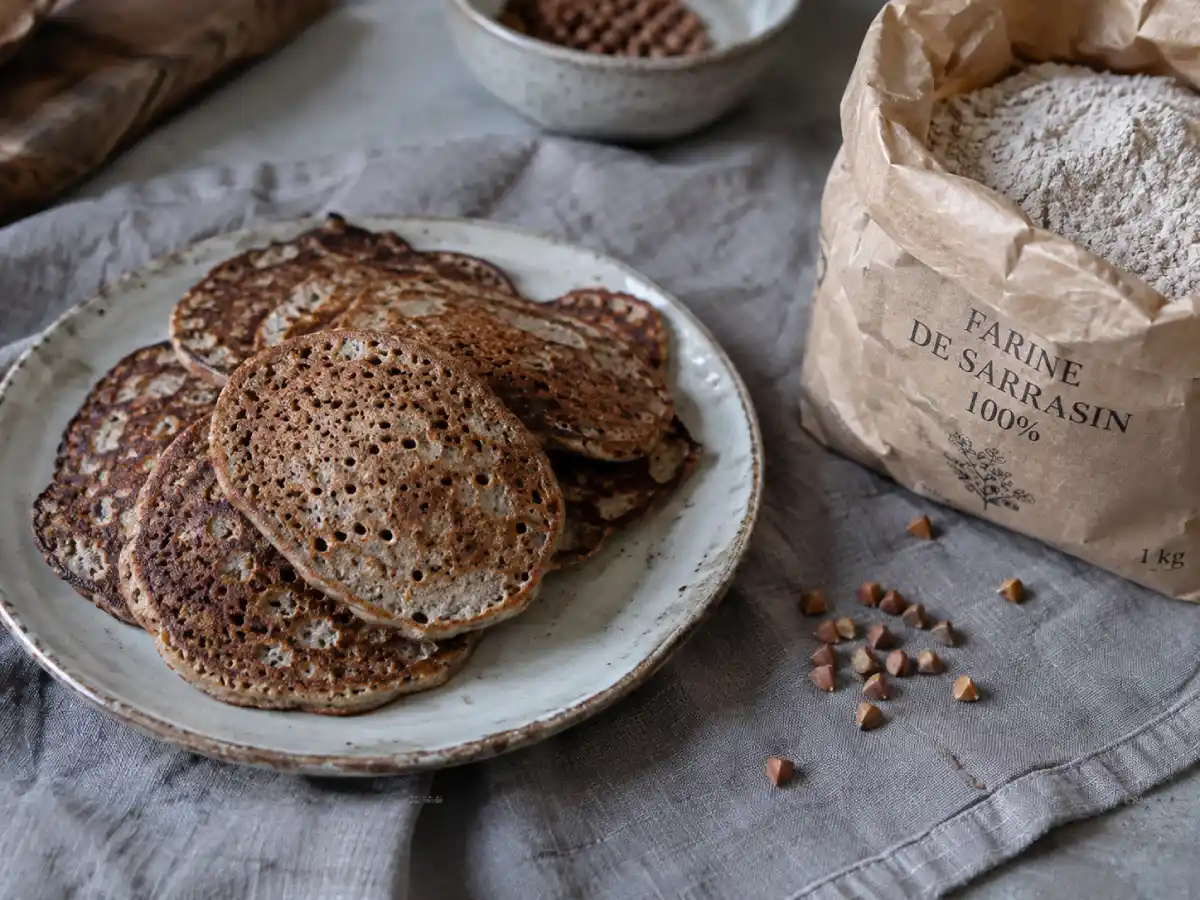
Despite its name, buckwheat is not a type of wheat. For gluten-free blini:
- ◆In Recipe 1, replace both flours with 120 g buckwheat flour.
- ◆Choose a buckwheat flour and baking powder labelled gluten-free, as some are processed alongside wheat. Anyone avoiding gluten for medical reasons should check every label.
- ◆The blini will be darker, more fragile and more strongly flavoured. Make them slightly smaller and flip them carefully.
How to top blini with caviar
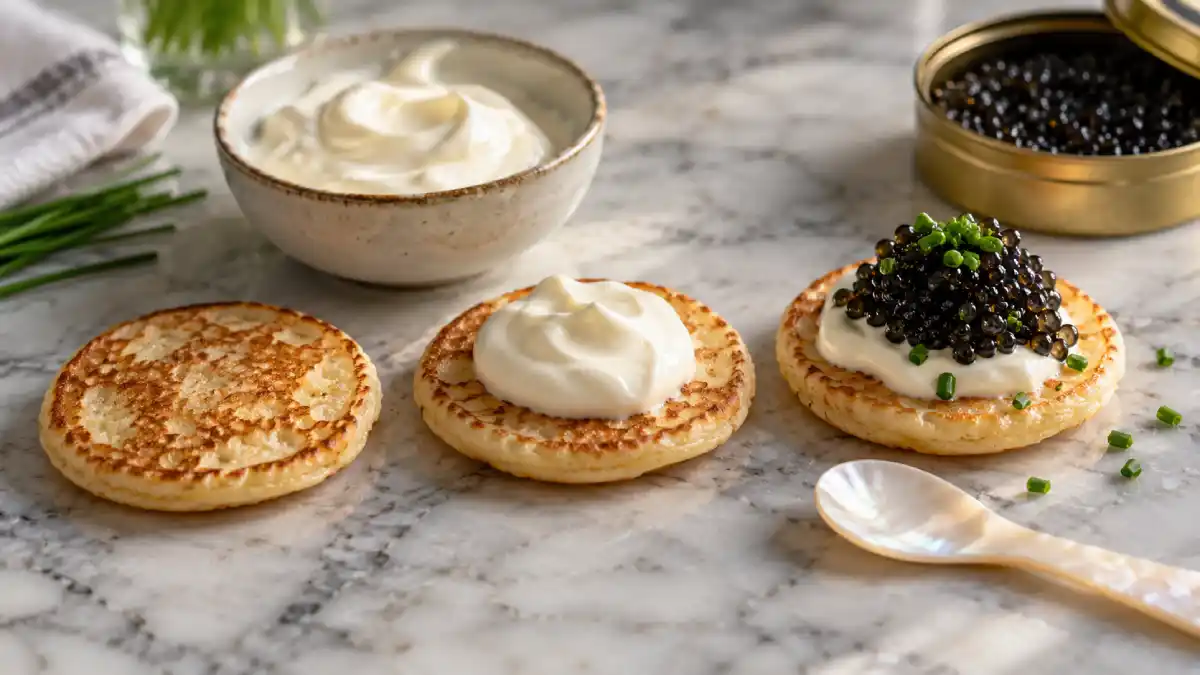
- 1Let the blini cool slightly. They should be warm, not hot, so they don’t warm the caviar.
- 2Add a small spoonful of crème fraîche (about 1 teaspoon) or a thin layer of unsalted butter.
- 3Top with about 3–5 g of caviar, using a spoon in mother-of-pearl, glass or porcelain (food-grade stainless steel also works; avoid silver).
- 4Optional: a few snipped chives or a little chopped egg. Use lemon and onion sparingly, if at all, so they don’t mask the caviar.
- 5Serve at once. Keep the tin on a bed of ice, with no direct contact between the pearls and the ice, serve small quantities at a time and keep the reserve in the fridge.
For more topping ideas, see what to serve with caviar and how to serve caviar.
How many blini do you need?
Start from the caviar, not the blini. Our usual guideline is about 30 g of caviar per person for a tasting and about 50 g for a generous aperitif centred on caviar; multiply by the number of guests (see our portion guide). At about 3–5 g of caviar per blini, that gives:
| Caviar | Blini topped (indicative) |
|---|---|
| 30 g per person (tasting) | about 6–10 blini per person |
| About 50 g per person (generous aperitif) | about 10–16 blini per person |
| One 30 g tin | about 6–10 blini |
| One 50 g tin | about 10–16 blini |
| One 125 g tin | about 25–41 blini |
Ranges are rounded down to whole blini (for example 50 ÷ 5 = 10 and 50 ÷ 3 ≈ 16.7). If caviar is only one of several foods, fewer blini per person are needed.
Make ahead, store and reheat
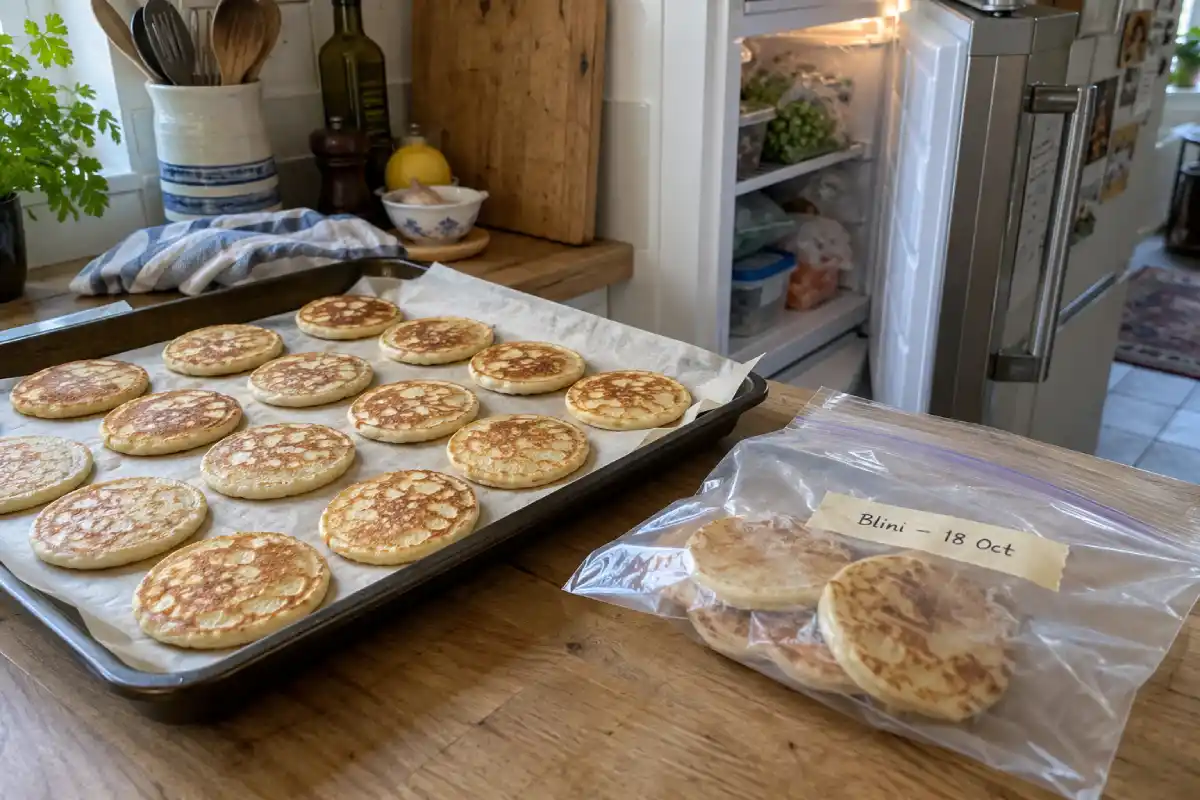
- ◆Batter: the yeasted batter can rise slowly in the fridge overnight. Let it stand at room temperature for about 30 minutes and fold in the whisked egg white just before cooking.
- ◆Cooked blini, same day: keep them covered; if they will wait more than about 2 hours, refrigerate them.
- ◆Fridge: up to 2 days, wrapped or in an airtight box.
- ◆Freezer: lay them flat on a tray, freeze, then pack in a bag for up to 1 month.
- ◆Reheat: spread on a baking tray, cover with foil and warm in the oven at 150 °C for about 5 minutes (8–10 minutes from frozen). The microwave tends to make them rubbery.
- ◆Toppings: keep crème fraîche and chopped egg covered in the fridge until serving.
Troubleshooting
| Problem | Likely cause | Fix |
|---|---|---|
| Flat and dense | The batter didn’t rise; milk too hot for the yeast | Use lukewarm milk (about 37 °C) and give it the full hour |
| Burnt outside, raw inside | Pan too hot | Lower to medium heat; cook a test blini first |
| Pale and greasy | Pan too cool or too much butter | Heat the pan longer; brush on a very thin layer of butter |
| Uneven sizes | Batter poured by eye | Use a measuring tablespoon or a squeeze bottle |
| Sticking to the pan | Pan not non-stick, or no butter | Use a non-stick pan and brush lightly between batches |
| Batter too thick | Batter too stiff | Whisk in 1–2 tablespoons of milk |
Shop-bought blini: how to make them better
If you buy ready-made blini, warm them in the oven (150 °C for 4–5 minutes, covered with foil) and brush them very lightly with melted butter. Choose plain blini without added flavourings, so the caviar stays the star.
Read also: our complete guide to Iranian caviar, its history, its varieties and how to buy it in Switzerland.
Frequently asked questions
What are blini made of?
Traditionally buckwheat flour (often mixed with wheat flour), milk, yeast, egg and butter. Quick versions use baking powder instead of yeast.
Are blini the same as pancakes?
They are a type of small pancake, but thicker and smaller than crêpes and usually made with buckwheat and yeast, which gives them a lighter texture and a nutty flavour.
What size should blini be for caviar?
About 4–5 cm across, made with one tablespoon of batter. That size carries about 3–5 g of caviar in a single bite.
Should blini be served warm or cold?
Warm, not hot. Hot blini warm the caviar too much; cold blini are firmer and less pleasant.
Can I make blini the day before?
Yes. Cook them, let them cool, wrap them and keep them in the fridge, then reheat in the oven at 150 °C for about 5 minutes before serving.
Can you freeze blini?
Yes, for up to a month. Freeze them flat, then reheat from frozen in the oven for 8–10 minutes.
Are buckwheat blini gluten-free?
Only if they are made with buckwheat flour alone and with flour and baking powder labelled gluten-free. Many recipes mix buckwheat with wheat flour.
What do you put on blini with caviar?
A small spoonful of crème fraîche (or a little butter) and about 3–5 g of caviar. Chives or chopped egg are optional.
Top your blini
Planning a party? See our guide to hosting a caviar tasting party.
Sources
- US Food and Drug Administration (FDA): Are You Storing Food Safely? (refrigeration and the 2-hour rule for perishable foods)
- LeDiamont: How much caviar per person: portion guide
The recipes are LeDiamont kitchen recipes based on standard blini proportions.