
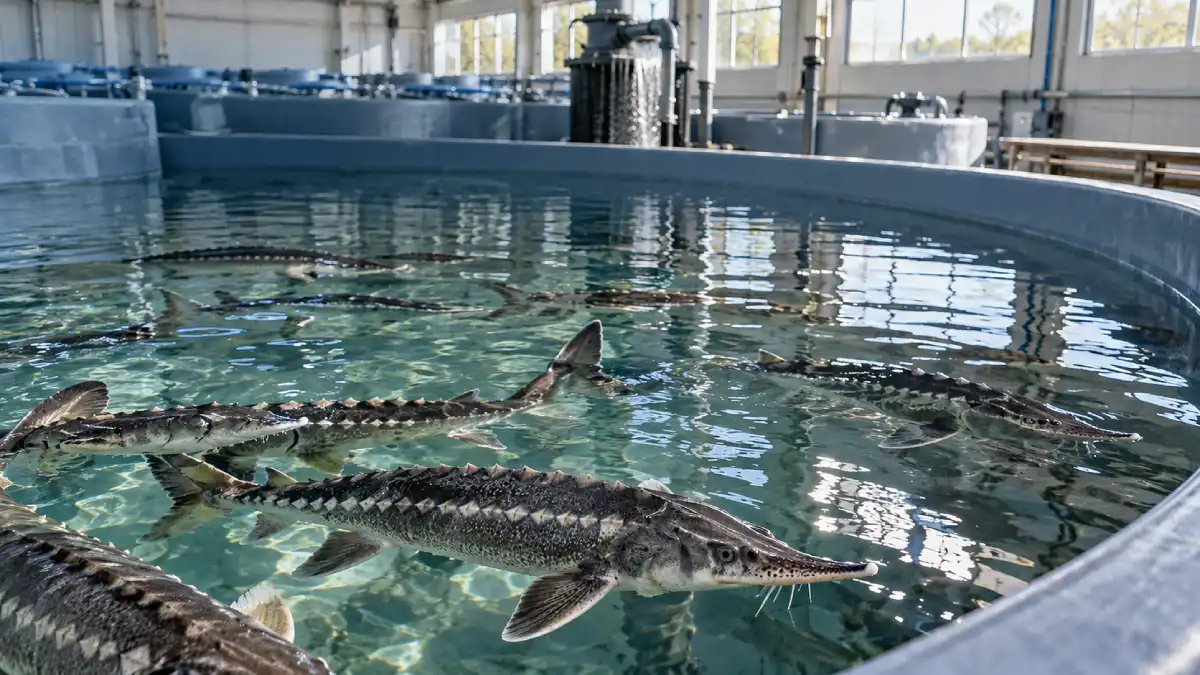
◆ Last updated: ◆ By LeDiamont — Zervan GmbH
Today, real caviar is farmed caviar
Almost all legal caviar sold today is farmed. Wild sturgeon in the Caspian Sea, the Black Sea and the Danube, the historic sources of caviar, were pushed close to extinction by overfishing, poaching and dams, and commercial wild harvesting has been stopped or suspended across most of their range. Good farmed caviar can match the finest wild caviar, with more consistent pearls, full traceability and no pressure on wild stocks. The label tells you which one you have: the CITES source code shows C or F for farmed and W for wild.
Key takeaways
- ◆“Wild caviar” is now the exception, not the norm. Legal wild caviar from the classic Caspian species is essentially unavailable.
- ◆Farming saved caviar as a product. It provides a legal, traceable supply without taking fish from the wild.
- ◆Quality depends on the farm, not just on “farmed”. Water, feed, the age of the fish and the skill of the caviar master matter most.
- ◆Farmed caviar is more consistent; wild caviar varied from fish to fish.
- ◆The label tells you which one you have: source code C or F (farmed) or W (wild).
Contents
Farmed vs wild caviar at a glance
| Wild caviar | Farmed caviar | |
|---|---|---|
| Source | Sturgeon caught in rivers and seas | Sturgeon raised in tanks, ponds or raceways |
| Availability today | Very rare; most historic wild sources closed | The vast majority of legal caviar |
| Legality | Heavily restricted; not legally available for the classic Caspian species | Legal with CITES documentation |
| CITES source code | W | C (bred in captivity) or F (born in captivity) |
| Consistency | Varies with each fish, season and river | More uniform pearl size, colour and taste |
| Traceability | Hard to verify; poaching is a real risk | Farm, lot and year on the label |
| Impact on wild sturgeon | Direct pressure on endangered populations | None on wild stocks; some farms support restocking |
| Taste | Shaped by the natural environment | Shaped by water, feed, age and processing |
What was wild caviar?
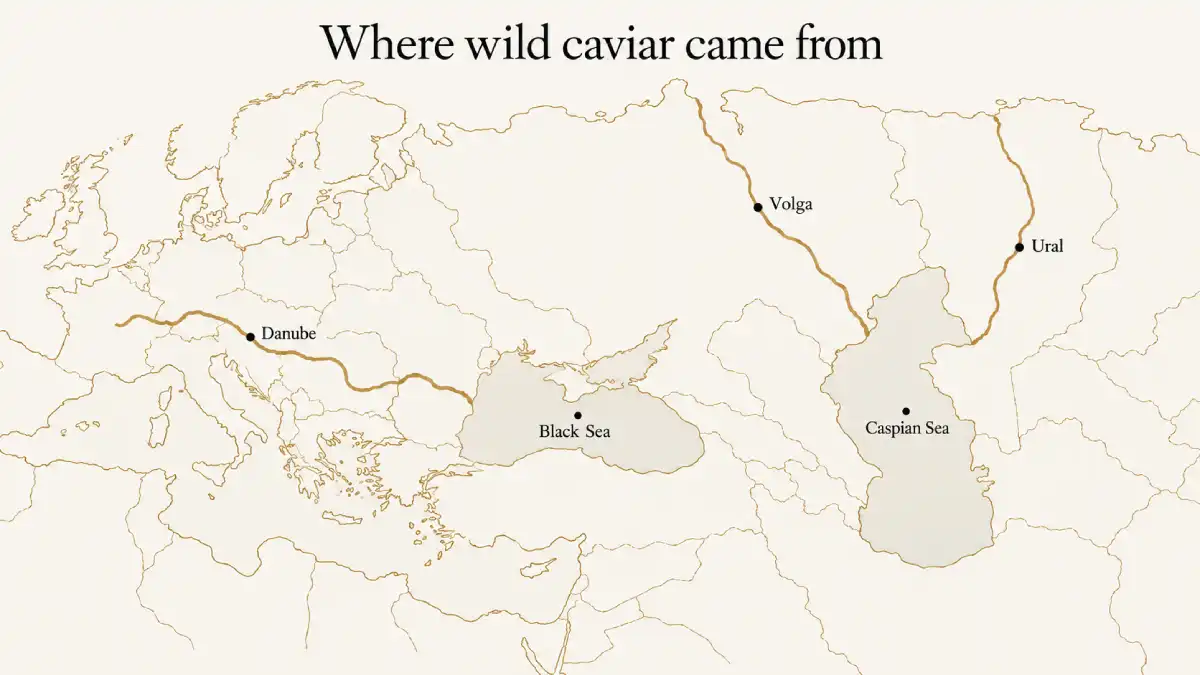
For centuries, caviar came from wild sturgeon caught as they swam upriver to spawn, mainly in the Caspian Sea (bordered by Iran, Russia, Kazakhstan, Azerbaijan and Turkmenistan), the Black Sea and rivers such as the Volga, the Ural and the Danube. Beluga, Ossetra and Sevruga from these waters built caviar’s legendary reputation.
The problem was scale. Through the 20th century, overfishing and poaching, combined with dams that blocked migration routes and pollution, devastated sturgeon populations. Because sturgeon take many years to reach maturity, often more than a decade, populations could not recover from heavy fishing.
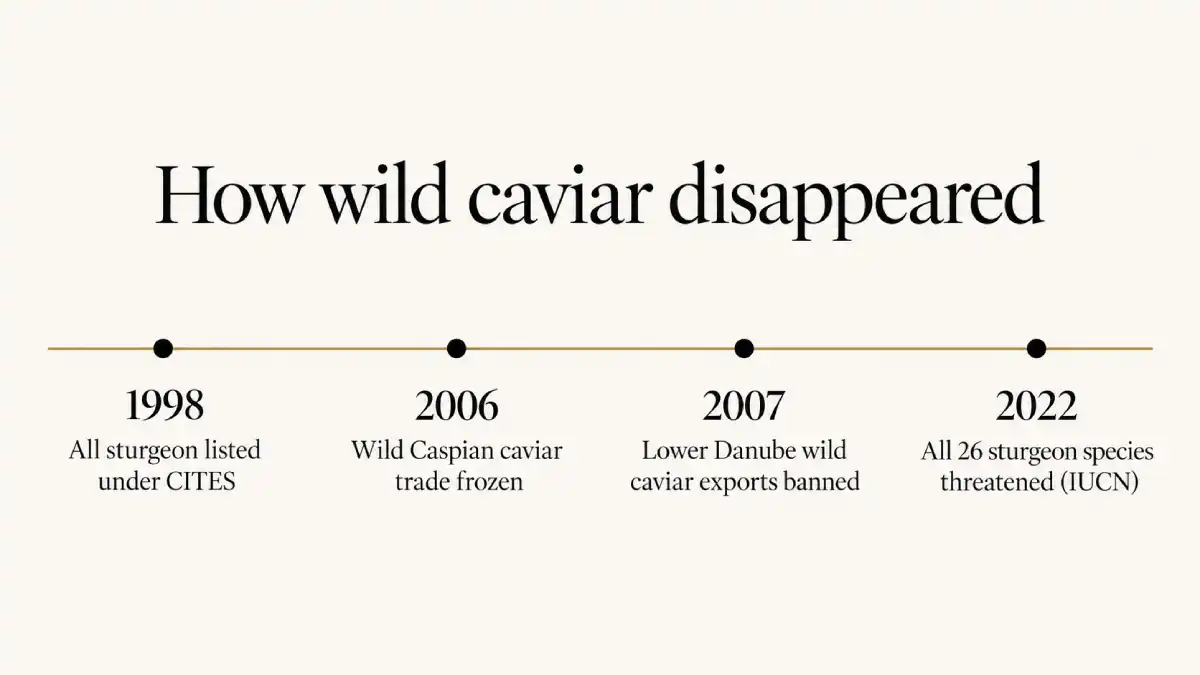
Why wild caviar has all but disappeared
- ◆1998: all sturgeon species were listed under CITES, the international convention regulating trade in endangered species. From then on, every legal export needed permits and a traceable label.
- ◆2006: CITES froze the international trade in wild caviar from the Caspian states, and Romania announced a ten-year ban on commercial fishing of wild sturgeon.
- ◆2007: CITES banned exports of caviar from wild sturgeon of the Lower Danube; Bulgaria added its own fishing ban in 2011.
- ◆2022: the IUCN Red List found that all 26 remaining sturgeon species are threatened with extinction.
Is wild caviar illegal? For the classic Caspian and Black Sea species (Beluga, Ossetra, Sevruga), legal wild caviar has essentially disappeared from the market, while illegally caught caviar is still seized. A few wild fisheries for less threatened species, such as the American hackleback (shovelnose sturgeon), remain open under strict local rules.
How caviar farming works
Modern caviar farms raise sturgeon from egg to harvest under controlled conditions:
- 1Hatching: eggs from captive broodstock are fertilised and hatched on the farm.
- 2Growing: the fish are raised in tanks, ponds or raceways, with monitored water quality, temperature and feed.
- 3Sexing: after a few years, the fish are checked by ultrasound. Females stay in the caviar programme; males are usually sold for meat.
- 4Maturing: the females are raised for many more years. Siberian sturgeon (Baeri) mature earliest; Ossetra and above all Beluga take far longer.
- 5Checking ripeness: the farm checks the eggs by ultrasound or a small sample, so the roe is harvested at its best.
- 6Purging: before harvest, the fish are often moved to clean, cold water and not fed for a period, which removes muddy or “off” flavours.
- 7Harvest and processing: the roe is screened, rinsed, lightly salted (malossol), graded and tinned within minutes, then labelled with a CITES code.
Farming systems
- ◆Recirculating aquaculture systems (RAS): indoor tanks where water is filtered and reused. Very controlled, low water use, independent of the local environment.
- ◆Flow-through and raceway systems: a constant flow of fresh water from a river or spring.
- ◆Ponds and lakes: more natural conditions, more dependent on climate and water quality.
Each system can produce excellent caviar; what matters is how well it is run.
Harvest methods
- ◆Traditional harvest: the female is harvested once, at peak ripeness. This is how most premium caviar is still produced.
- ◆No-kill or “stripping” methods: the eggs are collected from live fish, which can produce again later. The eggs are often treated to firm them up, so the texture can differ from traditional caviar. Labels and sellers usually say when caviar is “no-kill”.
Does farmed caviar taste different from wild?
Wild caviar was shaped by each fish’s natural diet, water and age, so it varied a lot, from extraordinary to disappointing. Farmed caviar is shaped by the farm’s choices:
- ◆Water quality and temperature: clean, cold water gives a cleaner taste.
- ◆Feed: affects fat content and flavour.
- ◆Age at harvest: older, slower-grown fish tend to give larger pearls and a more complex flavour.
- ◆Purging before harvest: removes earthy notes.
- ◆The caviar master’s skill: the amount of salt and the speed of processing are decisive.
In practice, the best farmed caviar can match the best wild caviar, and it is far more consistent from tin to tin. The bigger quality gap today is between good and mediocre farms, not between farmed and wild.
Is farmed caviar sustainable?
Farming removes pressure on wild sturgeon, which is its single biggest benefit. Farms still differ in their environmental footprint:
- ◆Water: recirculating systems use much less water and control waste; open systems depend on good management.
- ◆Feed: responsible farms use controlled, traceable feed.
- ◆Fish welfare: stocking density, water quality and handling matter.
- ◆Restocking: some farms and programmes release young sturgeon into rivers to help wild populations recover.
How to tell if your caviar is farmed or wild
- 1Read the CITES code on the tin. The second element is the source code: C or F means farmed, W means wild.
- 2Check the country of origin and the year of harvest.
- 3Be cautious with any “wild Caspian” claim on Beluga, Ossetra or Sevruga: legal supply of such caviar has essentially stopped.
- 4Ask the seller about the farm, the species and the harvest method.
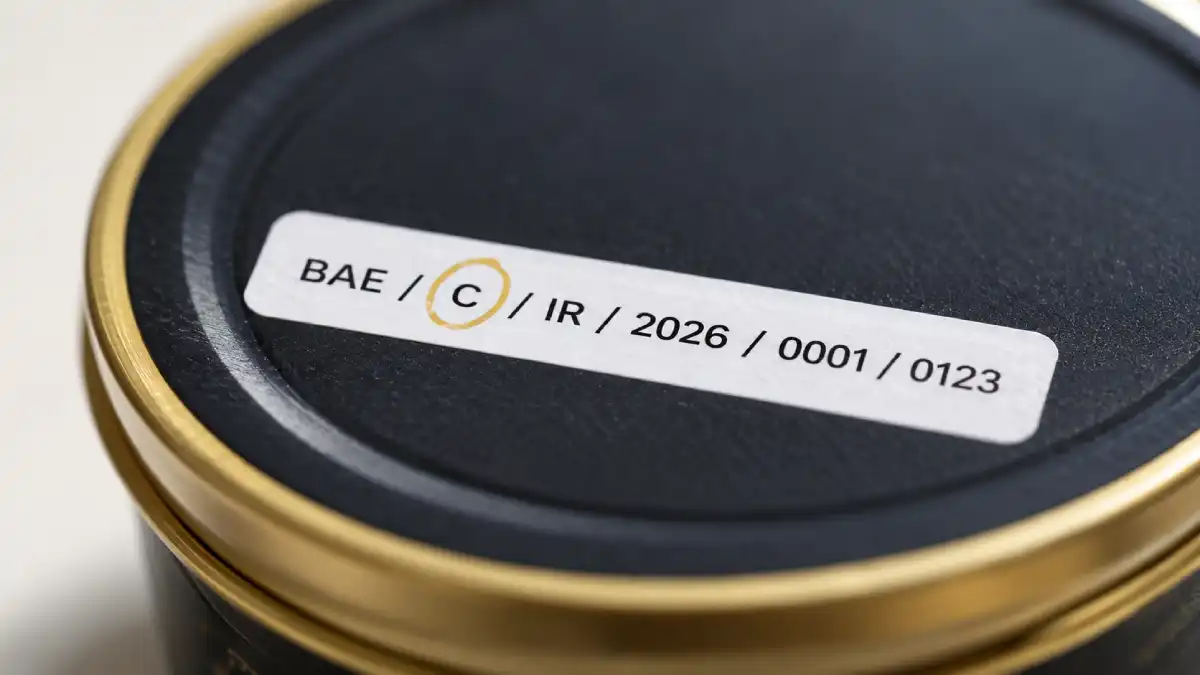
For a step-by-step guide to the whole label, see how to tell if caviar is real. For the Caspian story behind Beluga, Ossetra and Sevruga, read our guide to Iranian caviar.
Questions to ask a caviar seller
- ◆Which species is it, and where was it farmed?
- ◆What is the CITES code on the tin?
- ◆How old were the fish at harvest?
- ◆Is it malossol (lightly salted) or pasteurised?
- ◆Is it a traditional or a no-kill harvest?
- ◆How is it shipped, and how long does it keep?
A serious seller will answer all of these without hesitation. Once your tin arrives, our guides to serving caviar and how long caviar lasts will help you enjoy it at its best.
Is farmed caviar cheaper?
Not necessarily. Farmed caviar ranges from accessible Siberian sturgeon (Baeri) to top-grade Beluga that takes many years to produce. The price depends mainly on the species, grade, age of the fish and producer, not on whether the caviar is farmed. Read more in why caviar is so expensive and our Caviar Price Guide.
Frequently asked questions
What is the difference between farmed and wild caviar?
Wild caviar comes from sturgeon caught in rivers and seas; farmed caviar comes from sturgeon raised in tanks or ponds. Today, almost all legal caviar is farmed.
Is wild caviar illegal?
For the classic Caspian and Black Sea species such as Beluga, Ossetra and Sevruga, legal wild caviar is essentially no longer available. A few wild fisheries for less threatened species, like the American hackleback, still operate under strict rules.
Is farmed caviar as good as wild?
The best farmed caviar can match the best wild caviar and is more consistent. Quality depends on the farm’s water, feed, the age of the fish and the processing.
Is farmed caviar sustainable?
It removes pressure from endangered wild sturgeon. Beyond that, sustainability depends on the farm’s water use, feed, waste management and fish welfare.
How do I know if my caviar is farmed?
Look at the CITES code on the tin: the source code C or F means farmed; W means wild.
What is no-kill caviar?
Caviar collected from live sturgeon, which can produce again later. The eggs are often treated to firm them up, so the texture can differ from traditionally harvested caviar.
Why did wild sturgeon become endangered?
Overfishing and poaching for caviar, dams blocking spawning routes, pollution, and the fact that sturgeon take many years to reproduce.
Explore our farmed caviar
All our caviar comes from farmed sturgeon. Each LeDiamont product page names the variety and its origin, and we ship caviar chilled by Swiss Post within Switzerland and Liechtenstein, in 1 to 2 working days. If you have a question about the origin of a tin, contact our team.
Sources
- CITES: Resolution Conf. 12.7 (Rev. CoP17): Conservation of and trade in sturgeons and paddlefish, including the universal labelling system for caviar
- United Nations press (January 2006): CITES halts trade in wild Caspian caviar
- ICPDR: A high price for survival: fighting the illegal caviar trade in wild sturgeon (Danube bans and CITES Lower Danube export stop)
- IUCN (21 July 2022): IUCN Red List update: 100% of remaining sturgeon species threatened
- Federal Food Safety and Veterinary Office (FSVO): CITES in Switzerland