
◆ Last updated: ◆ By LeDiamont — Zervan GmbH
Dry, fine and mineral
Taste the caviar plain first, then try a dry champagne: Brut, Extra Brut or Brut Nature as a starting point. Possible combinations to explore include: Blanc de Blancs or a vintage champagne with Beluga, a Brut with Ossetra and Baeri, and an Extra Brut with bold Sevruga. If you enjoy sweeter styles such as demi-sec or doux, try a small sip after the plain caviar and judge the balance for yourself. The classic alternative is ice-cold vodka, sipped rather than shot.
Key takeaways
- ◆Start with dry, then compare. Brut or a drier style is a useful starting point; other drinks can be tried in small amounts after tasting the caviar plain.
- ◆Match delicacy with delicacy. Choose according to the flavour and intensity of the actual tin and cuvée, rather than assuming a prestige label guarantees the best pairing.
- ◆Explore the contrast. Notice how acidity, bubbles and the caviar’s texture feel together; the preferred balance is personal.
- ◆Serve both cold, but not too cold. Start Champagne at about 8–10 °C, following the bottle’s guidance, in a tulip glass; keep the caviar tin on a bed of ice without direct grain-to-ice contact.
- ◆Compare the drinks you enjoy. Vodka, dry white wine and alcohol-free options are starting points; try other styles in small amounts if you prefer them.
Why caviar and champagne work so well
Champagne and ice-cold vodka are caviar pairings described by Great British Chefs. [5] The points below are ways to explore the tasting experience, rather than guarantees that every cuvée will suit every tin:
Explore acidity and richness
Try a plain bite of caviar, then a small sip of Champagne. Notice whether the wine’s acidity gives a pleasant contrast to the caviar’s briny, creamy character.
Compare the textures
The bubbles and the texture of the caviar create different sensations. Alternate small bites and sips, and use plain water between comparisons.
Look for compatible flavour notes
A particular cuvée may be described as citrusy, chalky or mineral. Use its tasting notes as a guide, then decide whether the combination complements the flavour of the tin you are serving.
Understanding dosage: why “dry” matters
Dosage can involve adding a sugar-and-wine mixture before final corking. Sweetness categories describe the sugar content of the finished wine, not simply the amount added at that stage. The category definitions below are set out in EU labelling rules and explained by Comité Champagne. [1] [2]
| Category | Sugar per litre | With caviar |
|---|---|---|
| Brut Nature (zero dosage) | less than 3 g | Very dry; try a small sip after tasting the caviar plain |
| Extra Brut | 0–6 g | A dry option to compare with the actual tin |
| Brut | less than 12 g | A versatile starting point for a tasting |
| Extra Dry | 12–17 g | If you prefer this style, compare a small sip with plain caviar |
| Sec | 17–32 g | Try a small amount if you enjoy sweeter wines |
| Demi-Sec | 32–50 g | Taste the caviar plain first, then compare a small sip |
| Doux | more than 50 g | Start with a very small sip and judge the balance yourself |
Brut Nature requires less than 3 g of sugar per litre and no sugar added after the secondary fermentation. “Zero dosage” does not mean the finished wine necessarily contains zero sugar. Check the individual cuvée’s label and technical details.
For a deeper look at sweetness levels, see our guide to Demi-sec vs Brut Champagne.
Champagne styles explained
- ◆Blanc de Blancs: made exclusively from white grapes, most commonly Chardonnay; other permitted white varieties can also be used. Try it with a delicate tin and compare the actual flavours. [2]
- ◆Blanc de Noirs: made from black grapes (Pinot Noir and/or Meunier). Fuller, rounder, with red-fruit and brioche notes. Good with nutty caviars.
- ◆Non-vintage (NV) Brut: a blend of several years, consistent in style. The versatile, everyday choice.
- ◆Vintage: made from grapes harvested in a single year selected by the producer. The year is part of its identity; judge the particular cuvée’s flavour when choosing a pairing. [2] More in our guide to Vintage vs Non-Vintage Champagne.
- ◆Premier Cru / Grand Cru: designations associated with particular Champagne villages and the former cru scale; they are not a guarantee that a bottle will suit your caviar better. [2]
- ◆Rosé: another style to compare. Taste the caviar plain first, then try a small sip and decide whether the red-fruit character works for you.
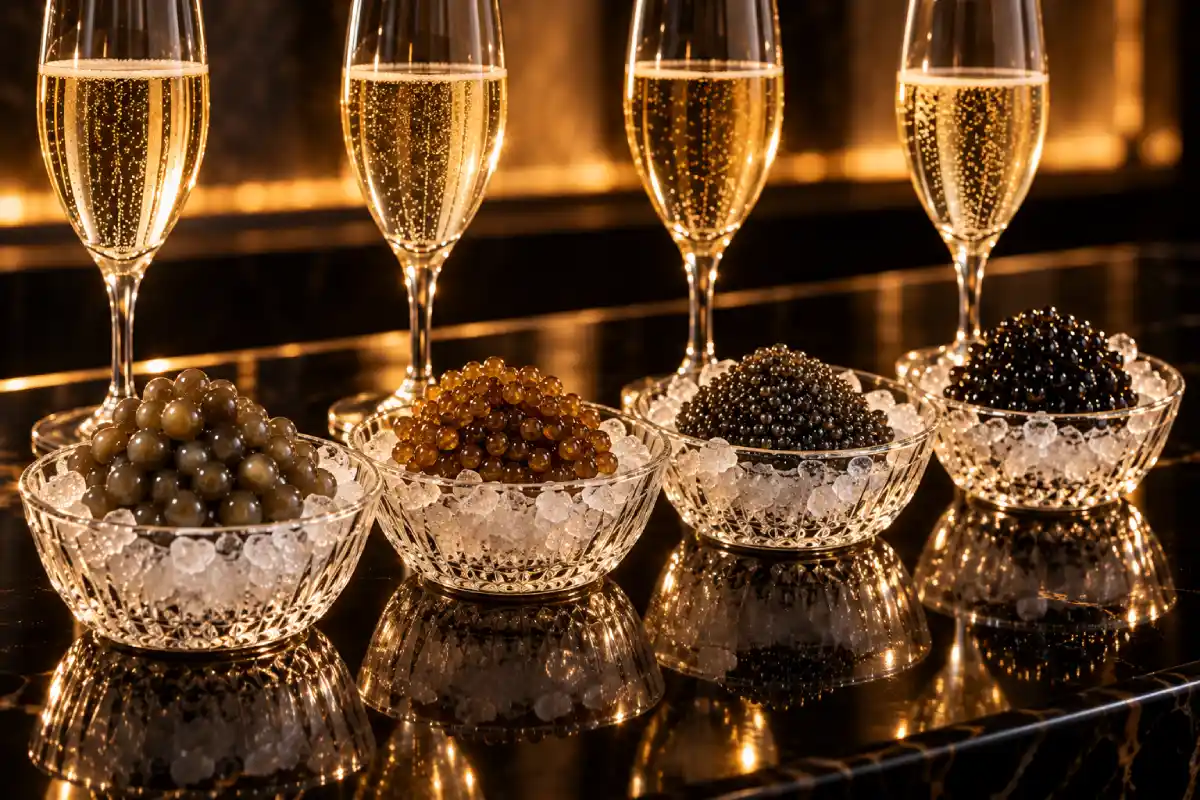
Pairing chart: which champagne with which caviar
| Caviar | Flavour | Champagne style to try | Why |
|---|---|---|---|
| Beluga | Delicate, buttery, large soft pearls | Blanc de Blancs or vintage Extra Brut | Finesse and minerality without overpowering a subtle caviar |
| Ossetra | Nutty, creamy, golden-brown pearls | Brut NV, or a Blanc de Noirs | Roundness and brioche notes echo the nutty flavour |
| Sevruga | Intense, briny, small pearls | Extra Brut or Brut Nature | A very dry style to compare with a brinier tin; check the actual cuvée’s sugar information |
| Baeri | Mild, clean, balanced | Brut NV | A starting point for a first tasting; compare the particular wine and tin |
Our champagne selection, matched to our caviar
Our champagne collection features cuvées from Sophie Cossy. The table below suggests combinations to try; the preferred pairing depends on the actual bottle and tin.
Availability: these references are currently unavailable; availability is shown on each product page. Styles and dosage may vary between vintages: check each bottle’s page for current details.
| Champagne | Style | Size | Pair with |
|---|---|---|---|
| L’Instant Blanc de Blancs 2019 | Extra Brut, Blanc de Blancs, vintage 2019 | 75 cl | Iranian Beluga AA® Caviar |
| Sophistiquée 2015 | Extra Brut, vintage | 75 cl | Beluga or Ossetra, tasted plain before trying the wine |
| Cuvée Origine | Extra Brut, Premier Cru | 75 cl | Iranian Sevruga Caviar |
| Élégance Brut | Brut | 75 cl | Iranian Ossetra Caviar |
| Cuvée Éclat | Brut, Premier Cru | 37.5 cl / 75 cl / 150 cl | Ossetra or Baeri; the half bottle suits a tasting for two |
How much champagne to serve with caviar
Choose a planning assumption for glasses per guest, then divide the total required volume by the bottle size. The table uses 125 ml pours; actual servings vary with pour size and spillage:
| Bottle | Size | Glasses (125 ml) | Good for |
|---|---|---|---|
| Half bottle | 37.5 cl | about 3 | Two guests having one glass each, with some spare |
| Bottle | 75 cl | about 6 | Three guests having two glasses each, or two guests having three each |
| Magnum | 150 cl | about 12 | Six guests having two glasses each |
For a worked planning example, assume two 125 ml glasses per guest. Eight guests would need 16 glasses, or 2,000 ml: round 2,000 ÷ 750 up to three 75 cl bottles. If you use another serving assumption, recalculate rather than treating these quantities as a required amount to drink.
And the caviar? Plan about 30 g per person for a tasting, about 50 g for a generous starter and about 125 g when caviar is the main event, then multiply by the number of guests. More in our guide to how much caviar per person.
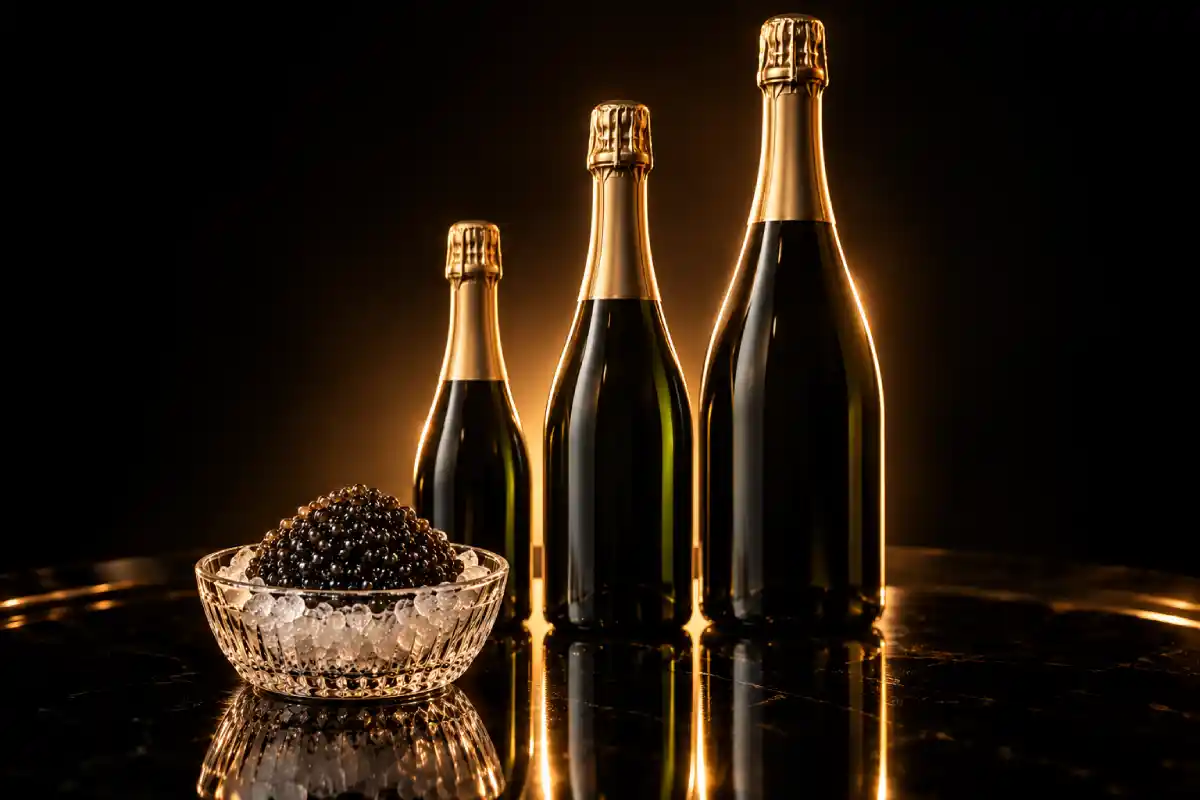
Choose the bottle size to suit the number of guests and your serving plan.
How to serve champagne with caviar
- ◆Temperature: about 8–10 °C is Comité Champagne’s starting recommendation. Follow the particular bottle’s guidance and compare its aromas as it warms in the glass. Chill it for a few hours in the fridge, or approximately 20–30 minutes in an ice bucket with water and ice. [4]
- ◆Glass: a tall, tulip-shaped glass is Comité Champagne’s recommendation for exploring aromas and bubbles. [3]
- ◆Opening: hold the cork, turn the bottle (not the cork) and let the gas escape with a soft sigh, not a pop.
- ◆Order of service: taste the caviar plain first, then sip. Alternate small bites and sips.
- ◆Order in a flight: taste the caviars from the most delicate to the most powerful, depending on the tins served. Compare the wines with those tins without making vintage status or species prestige determine the order.
- ◆The caviar: store it at −3 to +3 °C following the label. Take the tin out about 10 minutes before serving and keep it on a replenished bed of ice, without direct contact between the pearls and the ice.
Keep the caviar and accompaniments cold
Away from ice, aim to finish the caviar within approximately 30 minutes for quality and never leave it unrefrigerated for more than 2 hours. Keep crème fraîche and any prepared eggs or potatoes covered and refrigerated until serving. Opened caviar is best enjoyed within 48 hours; keep it refrigerated at −3 to +3 °C and follow any shorter period on the label.
For the caviar side of the table, see how to serve caviar.
How to host a caviar and champagne tasting at home
A side-by-side tasting is the best way to discover which pairing you prefer. For four to six guests:
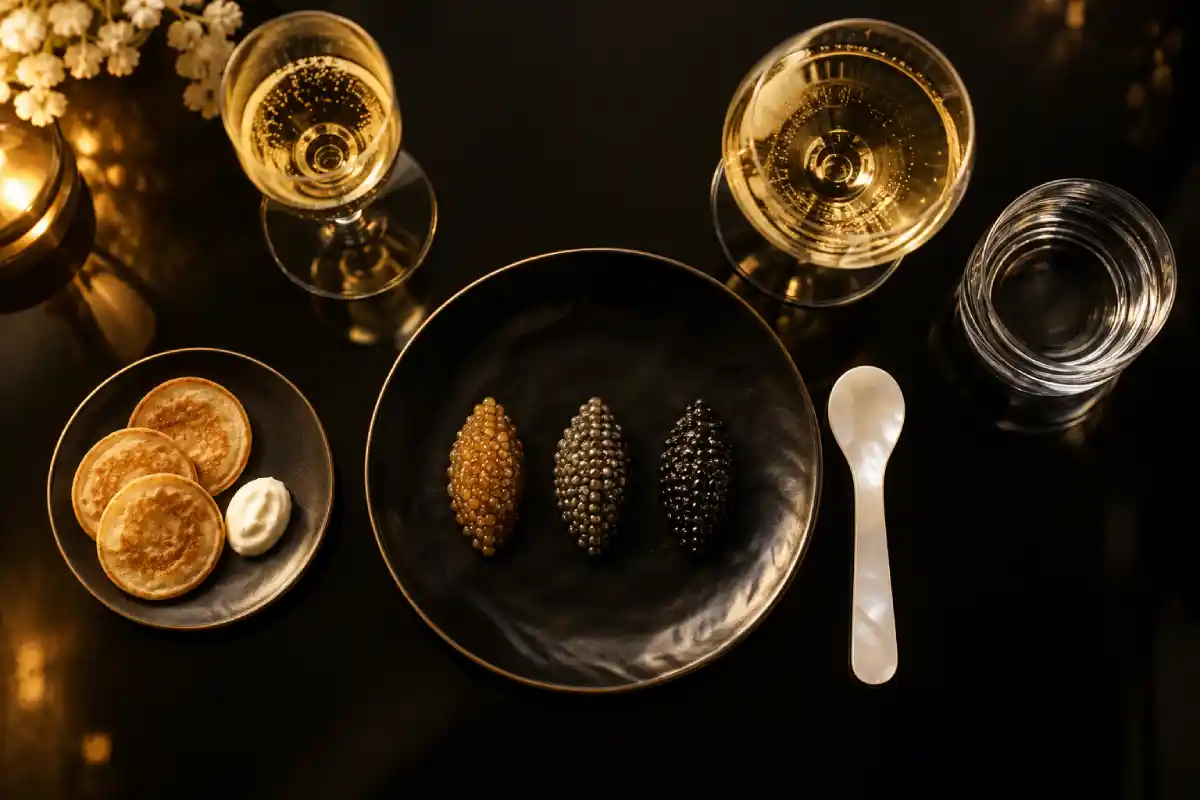
- 1Choose three caviars, for example Baeri, Ossetra and Sevruga, approximately 10 g of each per guest (approximately 30 g per person in total, or 120–180 g altogether for four to six guests).
- 2Choose two champagnes with clearly different styles, for example a Brut and an Extra Brut (or a Blanc de Blancs).
- 3Set up each place with a clean mother-of-pearl, glass or porcelain spoon; food-grade stainless steel is also acceptable. Avoid silver. Add a glass for each champagne and a glass of still water.
- 4Taste each caviar plain first, from the most delicate to the most powerful, according to the profile of the tins served, with a sip of water in between.
- 5Then try each caviar with each champagne. Note which combination makes the caviar taste rounder, saltier or longer.
- 6Finish with the favourite pairing on warm blini with a little crème fraîche.
Compare each combination and keep notes on what you prefer; different tins and cuvées can produce different results.
Caviar and champagne for every occasion
| Occasion | Caviar | Champagne |
|---|---|---|
| A first taste for two | Baeri or Ossetra | Brut, half bottle |
| Anniversary dinner | Beluga | Vintage Blanc de Blancs |
| Christmas Eve | Ossetra | Brut |
| New Year’s Eve party | Ossetra and Sevruga | Brut magnum plus an Extra Brut |
| Business gift | Ossetra | Brut, 75 cl |
For the food on the table, see what to serve with caviar.
Beyond champagne: other great drinks with caviar
Vodka
Ice-cold vodka is another pairing described by Great British Chefs. [5] If you enjoy it, try a neutral, unflavoured, high-quality vodka (wheat or rye), straight from the freezer, in small chilled glasses. Sip it, don’t shoot it: a small sip after the caviar cleans the palate and lets the flavour linger.
Dry white wine
Choose mineral, unoaked whites with good acidity:
- ◆Chablis (Chardonnay from Burgundy): chalky and saline, a textbook caviar wine.
- ◆Sancerre or Pouilly-Fumé (Sauvignon Blanc from the Loire): crisp and flinty.
- ◆Muscadet: light, briny, oyster-friendly.
- ◆Grüner Veltliner (Austria): fresh with a hint of pepper, good with milder caviar.
Other sparkling wines
Crémant (from Alsace, Burgundy or the Loire) and Franciacorta (Italy) are made by the same traditional method as champagne. Choose a Brut or Extra Brut.
Sake
A chilled, dry junmai or ginjo sake is a modern pairing: clean, umami-rich and gentle with caviar.
Non-alcoholic options
Try sparkling water, dry sparkling tea or an alcohol-free sparkling wine. Taste the caviar plain first; if you add citrus or prefer sweet soda or juice, try a small amount and judge the balance.
Other drinks: taste and compare
- ◆Sweet champagne (demi-sec, doux) and sweet sparkling wines. If you enjoy sweeter wines, compare a small sip with a plain bite of caviar.
- ◆Oaked white wines. Try a small sip and judge whether the particular wine’s oak character works with your tin.
- ◆Red wine. Taste the caviar plain first, then compare a small sip; different wines and tins give different results.
- ◆Beer. Compare a small sip after tasting the caviar plain and decide whether the combination suits you.
- ◆Flavoured vodka and brown spirits. Start with a very small sip so you can assess the drink’s aromatic intensity alongside the caviar.
Read also: our complete guide to Iranian caviar, its history, its varieties and how to buy it in Switzerland.
Frequently asked questions
What champagne goes best with caviar?
Brut, Extra Brut or Brut Nature is a useful starting point. Blanc de Blancs or a vintage cuvée is another option to compare with a delicate tin. Taste the caviar plain first and judge the particular wine rather than treating a style as a compulsory match.
Why do caviar and champagne go together?
The wine’s acidity, bubbles and flavour can give an interesting contrast to caviar’s texture and briny character. Taste the caviar plain first, then compare a small sip; the preferred balance is personal.
Is Brut or demi-sec better with caviar?
Brut is a useful starting point: its category is less than 12 g of sugar per litre, while demi-sec is 32–50 g per litre. If you prefer demi-sec, taste the caviar plain first and try a small sip to judge the pairing yourself.
Is vodka or champagne better with caviar?
Both are established pairing suggestions. Try the drink you enjoy in a small amount after tasting the caviar plain, or compare both; neither is compulsory.
Can you drink red wine with caviar?
Yes. Taste the caviar plain first, then try a small sip of the red wine you enjoy and decide whether the combination works for you. A wine’s colour alone does not determine your preferred pairing.
What white wine goes with caviar?
Mineral, unoaked whites with good acidity: Chablis, Sancerre, Pouilly-Fumé, Muscadet or Grüner Veltliner.
What temperature should champagne be served at with caviar?
About 8–10 °C is Comité Champagne’s starting recommendation; follow the particular bottle’s guidance. Store caviar at −3 to +3 °C, take the tin out about 10 minutes before serving and keep it on a bed of ice without direct grain-to-ice contact.
How much champagne do I need for a caviar party?
Using two 125 ml glasses per guest as a planning assumption, eight guests need 16 glasses (2,000 ml). A 75 cl bottle pours approximately six such glasses, so round up to three bottles. Recalculate for the actual pour size and number of servings you choose.
Plan your pairing
Sources
- Commission Delegated Regulation (EU) 2019/33 — Annex III, sparkling-wine sugar-content terms. Consolidated text dated 18 January 2025.
- Champagne FAQs — Comité Champagne. Sweetness categories, white-grape Blanc de Blancs, vintage wines and the Grand Cru/Premier Cru designations.
- The tasting experience — Comité Champagne. Suggested serving temperature and tulip-shaped glass.
- Storing an open bottle — Comité Champagne. See the sections on chilling, glass choice and opening Champagne.
- What to serve with caviar — Great British Chefs. General suggestions for Champagne or ice-cold vodka and tasting the caviar plain first.
- Champagne collection — LeDiamont. Collection and product-reference links; check individual pages for listed cuvée details and availability.