
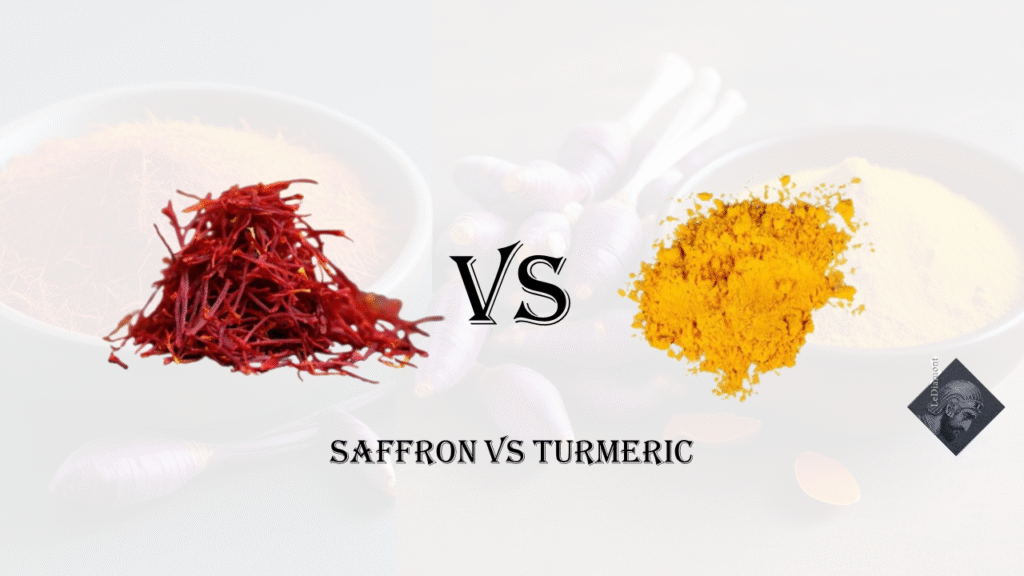
Saffron and turmeric can both add colour to food, but they come from different plants and produce different flavours. Choose them for the result you want in the recipe.
Two different plant ingredients
Saffron consists of the dried stigmas of Crocus sativus. Turmeric comes from the rhizome of Curcuma longa, a plant in the ginger family. The botanical references from the Royal Botanic Gardens, Kew are listed below.
| Ingredient | Form | Culinary character |
|---|---|---|
| Saffron | Red threads or powder | A distinctive, delicate aroma; often described as floral. |
| Turmeric | Fresh rhizome or yellow powder | An earthy, warm and slightly bitter flavour. |
Can one replace the other?
Turmeric may supply a yellow colour in a recipe, but it does not reproduce saffron’s aroma. Saffron likewise changes the flavour of a recipe written for turmeric. If substituting, start with a small amount and taste; do not assume equal spoonfuls will give the same result.
Ways to use them
For saffron, consider a rice dish, a sauce or a dessert where its aroma can stand out. Follow your recipe’s instructions for infusion and quantity. For turmeric, try a curry, a vegetable marinade or a dressing, adjusting its earthy flavour to the other ingredients.
These are culinary suggestions rather than promises about health. This comparison concerns ordinary food use.
How to compare saffron selections
Names such as Negin or Sargol describe commercial selections; ask what they mean for the product being sold. A name alone is not proof that a batch is the purest, the best or the most expensive. Compare the documented origin, net weight, supplier information and any relevant batch analysis.
Our guide to Iranian and Spanish saffron explains how to assess those details. The current saffron selection provides the product information available from LeDiamont.
Read also: our complete guide to Iranian saffron, the Negin, Sargol and Pushal grades and how to recognise real saffron.
Frequently asked questions
Can turmeric replace saffron?
For the yellow colour, partly; for the taste, no. Saffron has a unique floral, honeyed aroma, while turmeric tastes earthy and slightly bitter.
Why is saffron so expensive?
Each Crocus sativus flower bears only three stigmas, picked by hand. About 150,000 flowers are needed for one kilo of dried saffron.
How can I avoid saffron cut with turmeric?
Buy whole saffron threads rather than powder: powder is easily mixed with turmeric or paprika. A genuine thread colours water slowly to golden yellow and stays red itself.
How should saffron be used?
The Persian way: place a few threads on ice cubes and let them melt; this liquid saffron keeps for a week in the fridge. Otherwise, steep the threads in a little hot water before adding them to the dish.
How should saffron be stored?
In a tightly closed container, dry, away from light and heat.