
Call us toll free: +41 (0)79 777 22 35

info@le-diamont.com

Browse

Want to chat?

Call us toll free 41 (0)79 777 22 35

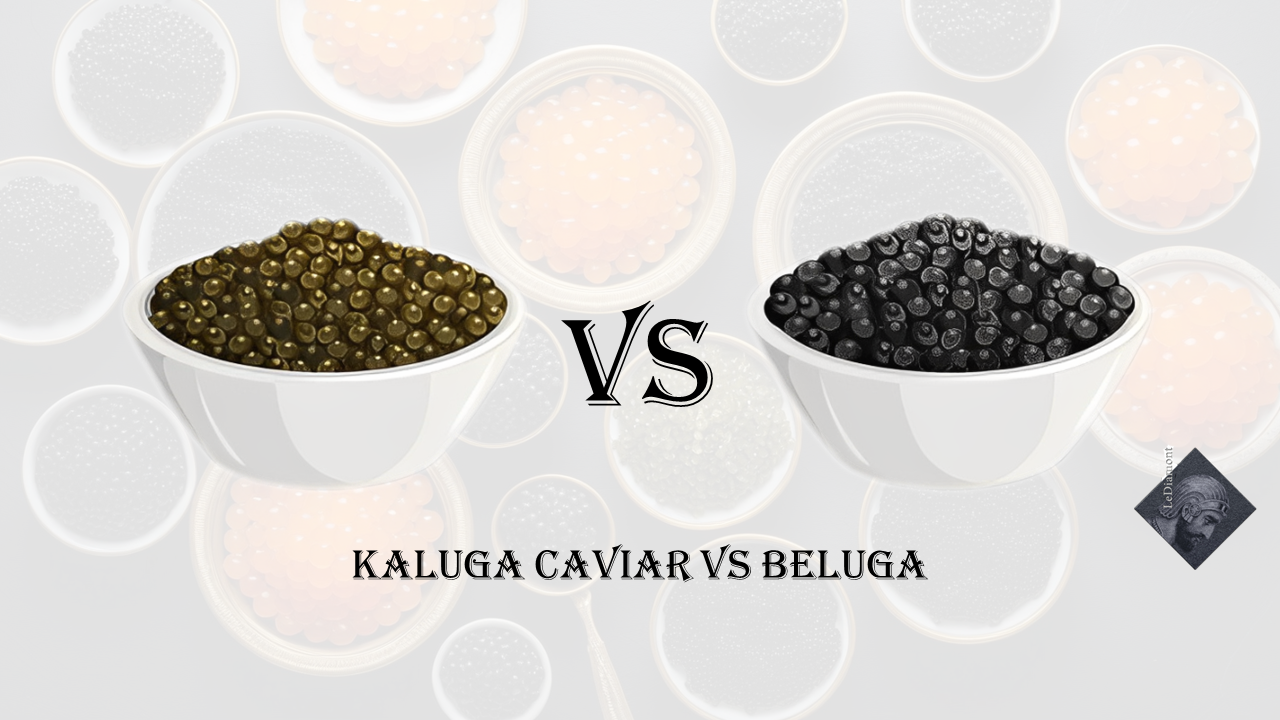
Kaluga caviar VS Beluga

Kaluga caviar VS Beluga

The sturgeons, or sturgeon fish, are members of the sturgeon family—a very ancient aquatic species dating back several hundred million years ago from the Jurassic Age, surviving evolution and reaching us today.

The sturgeon is classified into two categories: Acipenser and Huso. Kaluga caviar and Beluga caviar come from the Huso fish. When comparing Kaluga caviar vs Beluga , Beluga is notably more expensive due to its rarity and the larger, more delicate eggs, whereas Kaluga caviar offers a bold, yet slightly more affordable alternative.

There are 27 species and subspecies of sturgeon in the world, with 5 species inhabiting the Caspian Sea, which holds 93% of the world’s sturgeon reserves. The sturgeon in the Acipenser category is further divided into the following 6 species.

  • Acipenser Persicus
  • Acipenser gueldenstaedtii
  • Acipenser Nudiventris
  • Acipenser Stellatus, also known as Ozone or Sevruga
  • Acipenser Baerii, often referred to as Berry
  • Acipenser Schrenckii

If you are a caviar fan, you certainly realize there are many varieties to explore. Two of the most popular ones are Kaluga and Beluga caviar. Although these types of caviar may look similar in some ways, they do have a few key differences. This article discusses some of these distinctions in the Kaluga caviar vs Beluga debate to guide you on which one might be the best choice for you.

Beluga caviar

Beluga caviar is one of the most coveted and expensive edibles in the world. Indeed, the best caviar in the world is the caviar harvested from the Russian Beluga sturgeon. It is because the reproductive cycle of the animal is exceedingly long—hence, acquiring beluga roe for caviar is a waiting game, which greatly increases the cost one will have to pay for purchasing such caviar. But the prolonged reproductive rate is not the sole reason Beluga caviar is so costly.

The color of the Beluga eggs is light grey to black. Every bite of Beluga caviar will take you on a journey to the sea, actually melting on the tongue and letting you taste and enjoy every bite of it.

The life history of beluga sturgeon is similar to that of salmon species, which also spawn in freshwater and remain in saltwater for most of their adult life. During the spawning period, they migrate into the freshwater to lay their eggs. Although female sturgeon may live up to over 110 years, they reach maturity at 20 years old to start egg production.

Due to being one of the largest species of fish, the roe would be quite big and very much in demand from all the caviar connoisseurs around the world.

Lediamont’s Beluga Collection

  • Iranian Beluga Caviar AAA
    Iranian Beluga Caviar
    Indulge in the exquisite taste of Iranian Beluga Caviar AAA, a premium delicacy sourced from the rare Huso Huso sturgeon. This top-tier caviar features large, 3.5mm eggs in shades of light to dark gray, delivering a refined and delicate flavor that delights even the most discerning palates. With its smooth texture and luxurious taste, it’s a must-have for gourmet enthusiasts. Imported directly from Iran, this prized caviar is crafted with the finest sturgeon eggs, salt, and preservatives (E284, E285) to ensure its exceptional quality.
    For optimal freshness, store this delicacy between -3° and 3°C. Once opened, it should be consumed within 3 days to experience its full flavor. Explore the allure of Iranian Beluga Caviar AAA, renowned worldwide for its unparalleled taste and quality.
  • Iranian Black Beluga Caviar AA
    Iranian Black Beluga Caviar AA
    Discover the luxury of Iranian Black Beluga Caviar AA, another exceptional treat from the Huso Huso sturgeon. Known for its impressive quality and rich flavor, this caviar boasts grain sizes ranging from 3.0 to 3.3mm, featuring a light to dark gray hue. Its refined, long-lasting taste is complemented by subtle hazelnut undertones, offering a delicate texture that promises an unmatched dining experience for caviar aficionados.
    Made from sturgeon eggs, salt, and preservatives (E284, E285), this caviar is an allergen for those sensitive to fish. To maintain its optimal freshness, store it between -3° and 3°C with a shelf life of up to 3 months before opening. Once opened, savor it within 3 days for the best experience. Treat yourself to the luxurious world of Iranian Beluga Caviar AA today and elevate your gourmet indulgence.

Experience the world-class quality and taste of Lediamont’s Iranian Beluga Caviar Collection – a true celebration of luxury and refinement.

Kaluga caviar

What makes the Kaluga Caviar different from other species in the fish family is its enormous size. The Kaluga sturgeons can grow to sizes of over 18 feet and weight of at least 2,205 lbs. They eat salmon and other fish when they’re in the river basin. Similarly to Beluga sturgeons, they also live in saltwater for a part of their lives.

The Kaluga Sturgeon is not a big fish only; they can also produce great amounts of eggs. For example, an adult female Kaluga can produce up to 44 pounds of Caviar. Kaluga Caviar is ideal for those who enjoy caviar with firm, well-defined beads. Its texture makes it a perfect choice for fans of this kind of consistency. So, size and texture are two important factors that make Kaluga Caviar an experience unlike each other.

Even without deep caviar knowledge, you can appreciate Kaluga’s size and richness. It stands out with a glossy grey color and occasional dark brown and olive-green flecks. Kaluga caviar has a shiny grey color with dark brown and olive-green flecks. The flavor profile is buttery and earthy, with just a hint of salt.

Kaluga Caviar Vs Beluga ;Differences between Kaluga and Beluga

Kaluga caviar vs Beluga are two of the most luxurious caviar types available, yet they have distinct differences in terms of origin, size, flavor, and price. Kaluga caviar comes from the Kaluga sturgeon, a large species native to the Amur River basin. The Kaluga sturgeon can grow up to 18 feet in length and weigh over 2,200 lbs, producing eggs with a firm texture, glossy grey color, and a mild, buttery flavor with earthy undertones. It is a popular option for caviar enthusiasts who appreciate well-defined beads and a consistent texture. In the Kaluga caviar vs Beluga comparison, Kaluga offers a slightly more affordable luxury without compromising on quality.

On the other hand, Beluga caviar is considered the finest and most expensive caviar in the world. It is sourced from the Huso huso sturgeon, a species that has a much longer reproductive cycle, making its roe incredibly rare and valuable. Beluga caviar is distinguished by its large, soft eggs, which melt in your mouth with a rich, buttery flavor and subtle brininess. The Beluga sturgeon can live over 110 years but only begins to produce roe after reaching maturity at around 20 years old, adding to the exclusivity and high cost of Beluga caviar. When discussing Kaluga caviar vs Beluga, it’s clear that the rarity and unique characteristics of Beluga make it the more luxurious and sought-after choice.

CONCLUSIUN

When comparing Kaluga caviar vs Beluga, the Beluga stands out as the superior choice due to its delicate texture, exquisite flavor, and rarity. Its roe is larger, softer, and more luxurious, offering a melt-in-your-mouth experience that is unmatched by Kaluga. While Kaluga caviar provides a more affordable alternative, it lacks the refined complexity that makes Beluga caviar so prized among caviar connoisseurs.

For those seeking the ultimate in luxury and taste, Beluga caviar remains the gold standard in the Kaluga caviar vs Beluga debate. Whether you are a seasoned caviar lover or new to the experience, Beluga caviar offers a true gourmet indulgence.

Leave a Reply

Your email address will not be published. Required fields are marked *